
Issues on the security of personal information shared through the Internet and concerns over people’s privacy blew over when former security contractor Edward Snowden revealed juicy details showing the extent of surveillance the US government has been doing.
At the center of this controversy is the National Security Administration (NSA), which has been monitoring users’ activities on the Internet and other electronic communications. It is being criticised for gathering and requesting people’s phone numbers and other data from Internet companies.
These Internet companies, feeling the need to downplay their involvement in the surveillance program, seek more transparency from the US government and want the people to know what these data requests are. They are bent on offering public assurances that users’ personal information are safe from unwarranted scrutiny.
Nowadays, almost everyone is talking about it, or at least aware of it, leading people to become wary or think twice of what information about their personal lives have they already shared to the world as a result of their Internet activities.
The secret spy program, in all likelihood, is meant for something good – to prevent terrorist attacks. But in the light of the recent revelations, people now stop to consider before they give out personal details over free web-based consumer apps, platforms, or sites.
Such is the case that the announcement on Apple’s new iPhone 5S feature – fingerprint recognition technology – is raising some questions on privacy and security. Aren’t users in danger of getting their information hacked? Won’t these critical personal data fall into the wrong hands?
The very first issue of Asia Hawk Newsletter explores concerns over information privacy and data security. The fact remains that consumer apps or free web-based platforms analyse their users’ preferences and overall behaviour as people access and use the sites. Based on these user information, the sites can recommend some relevant content or say products and services. This sounds just like the tailored ads. Well, that’s how it goes.
 Because these are free or cheap, SMEs might find themselves using these consumer sites every now and then to send or store business information. But what if the data being handled is highly sensitive? What if it contains information about employees, accounting, or inventory? Data of such nature are crucial to the business and require secure handling.
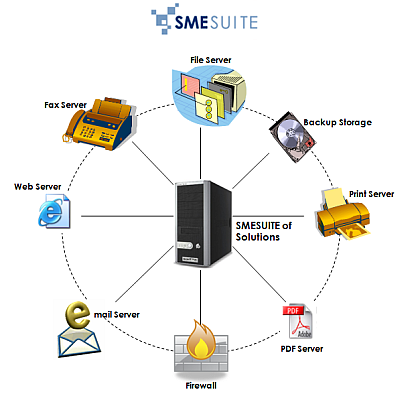
Enterprise-class software is a good way to go and need not be expensive. SMEs can also implement these operational efficiencies in their businesses at very affordable costs and see the benefits and advantages they bring on top of information security. One such IT solution is the SME Suite offered by Asia Hawk.
SME Suite delivers CRM, file server, HR, inventory, payroll, web disk, and web mail services for small business that can be scaled up or down to meet the needs of SMEs at varying stages of development. The solutions are practical and cost-effective plus they keep all the information secure in more ways the one. Read on to find out more or call Asia Hawk at +65 6347 7778.